Year
2024
Theme
City Science Lab, Media Lab
Category
Research Analysis
Introduction
Reimagining Commerce as Civic and Ecological Infrastructure
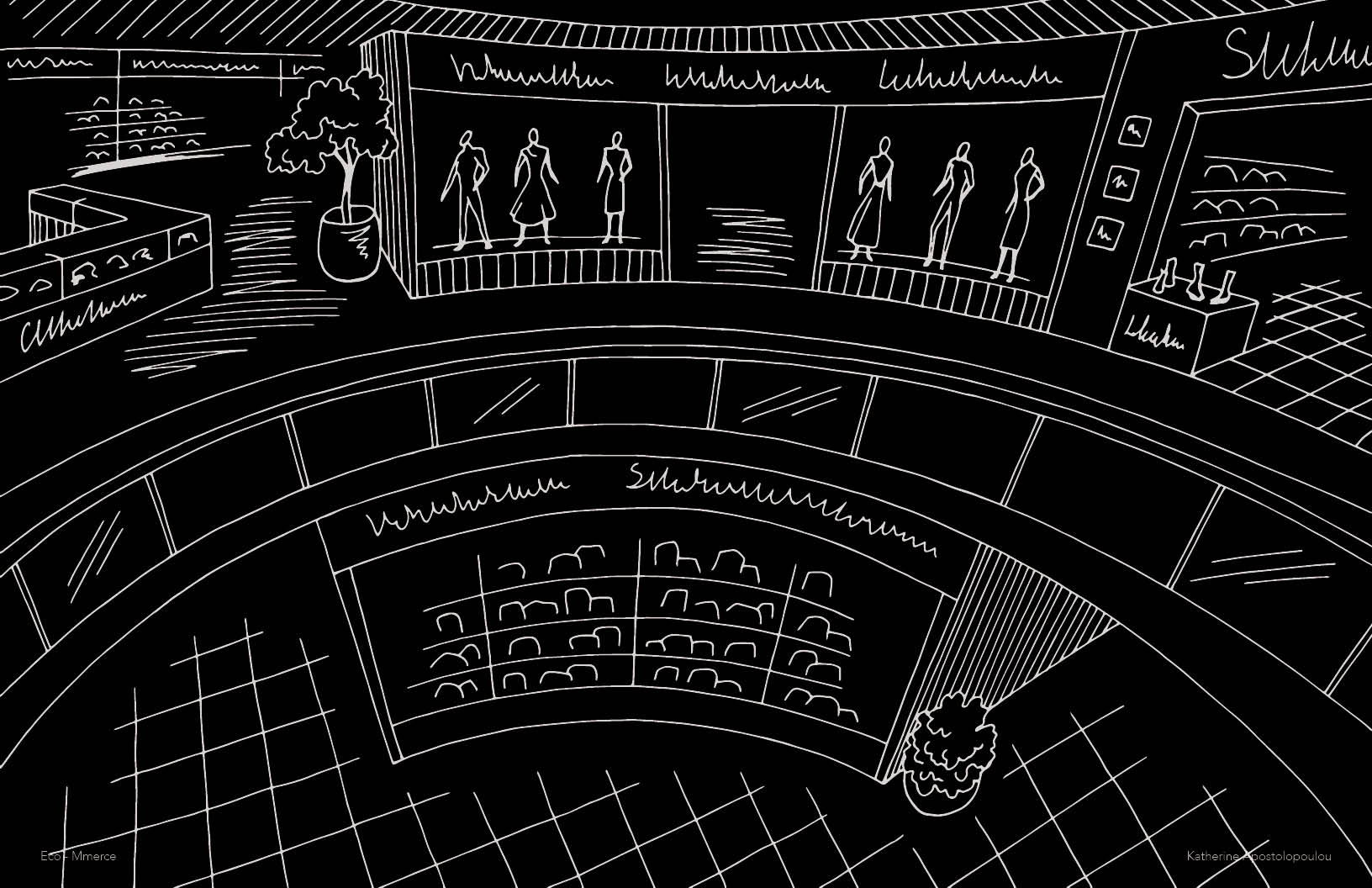
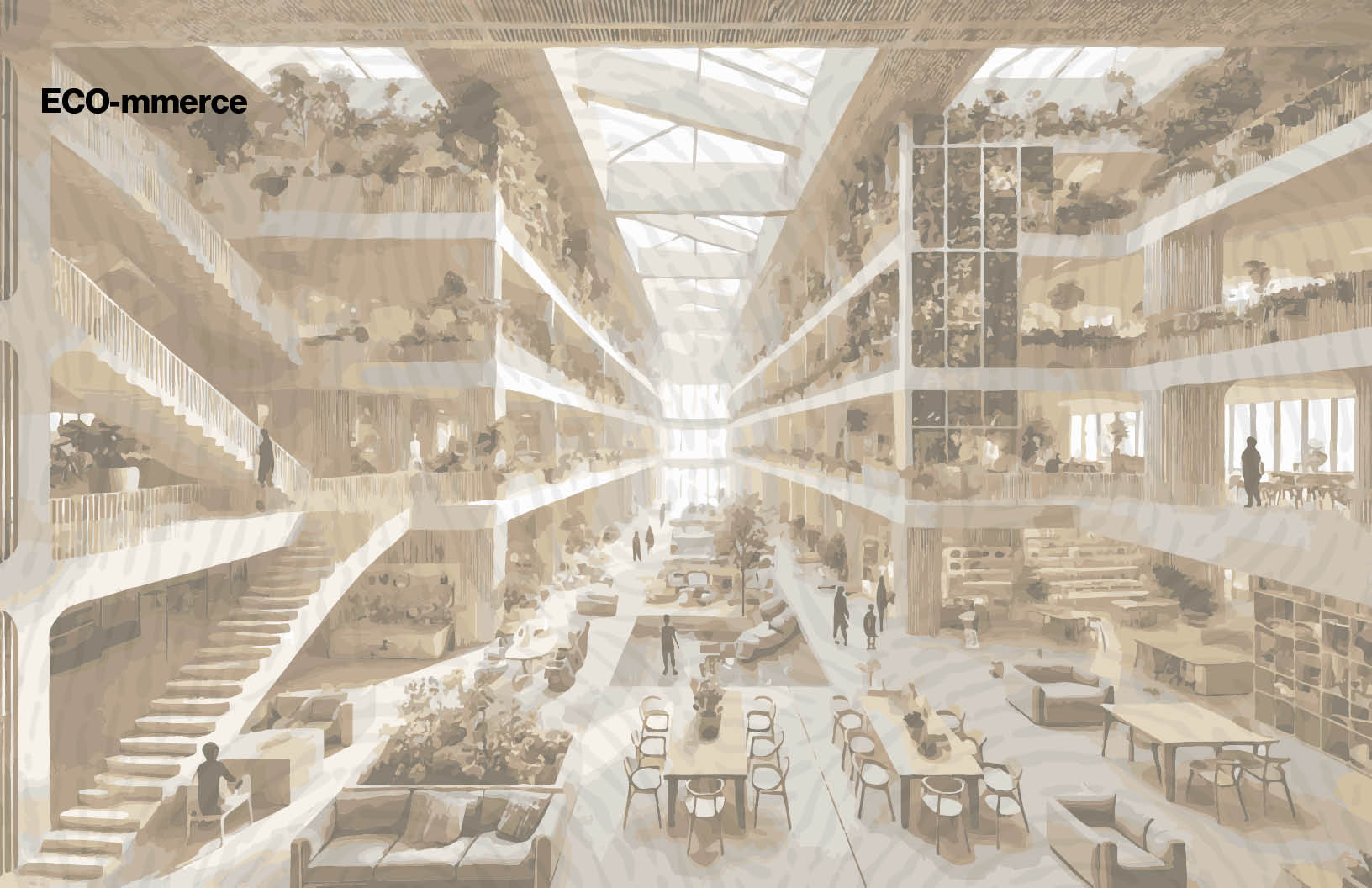
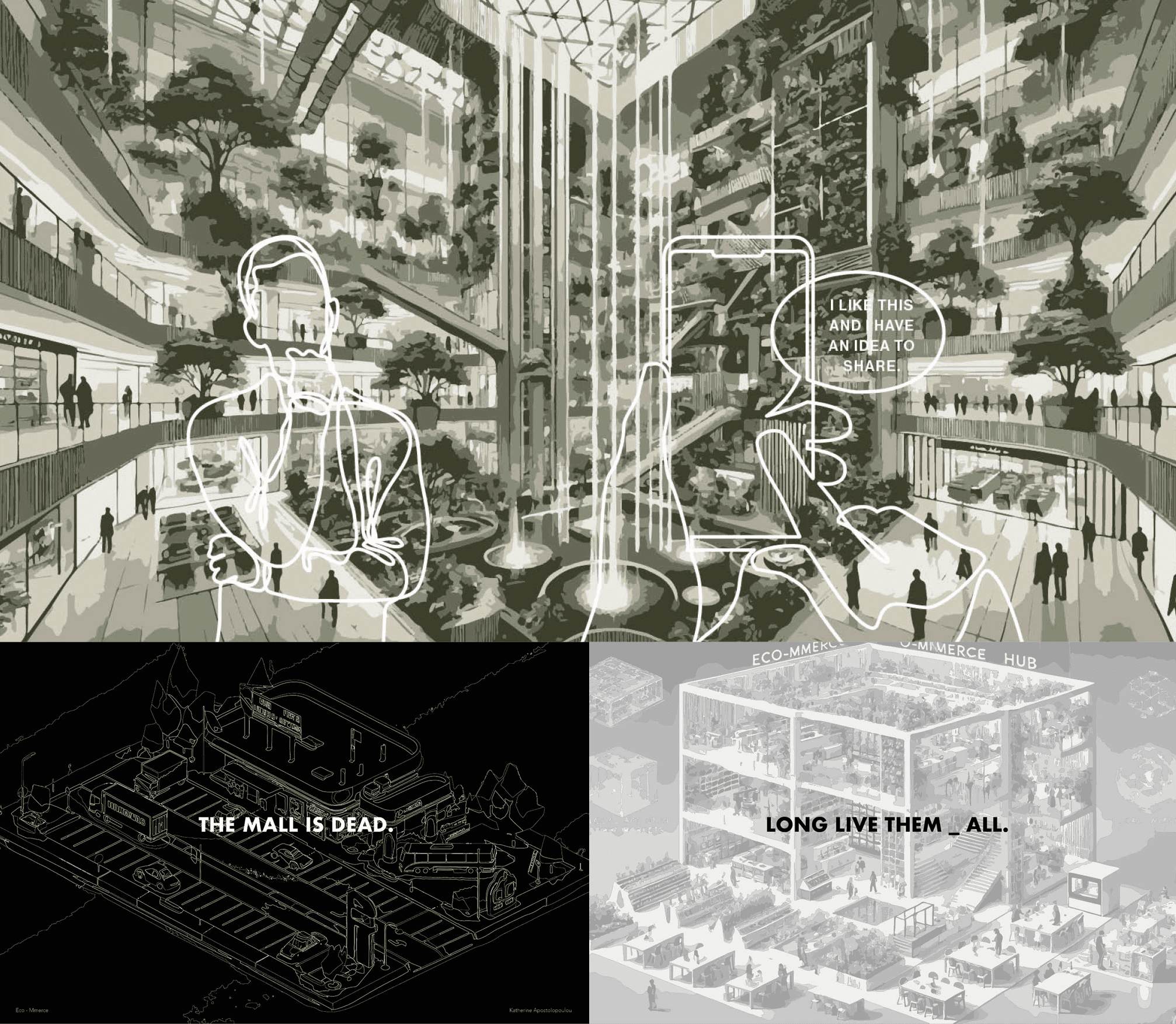
Eco-mmerce investigates how contemporary systems of consumption, logistics, and retail are reshaping urban life through waste production, carbon emissions, resource extraction, and environmental degradation. Positioned between speculative urbanism and architectural research, the project proposes an alternative future for commerce in which malls, marketplaces, and distribution systems evolve from spaces of consumption into localized ecosystems of production, repair, exchange, and collective life. Rather than treating retail as an isolated economic activity, the proposal approaches commerce as a spatial, environmental, and social infrastructure capable of reorganizing relationships between communities, material flows, and urban space.
Challanges
From Consumption Spaces to Circular Urban Systems
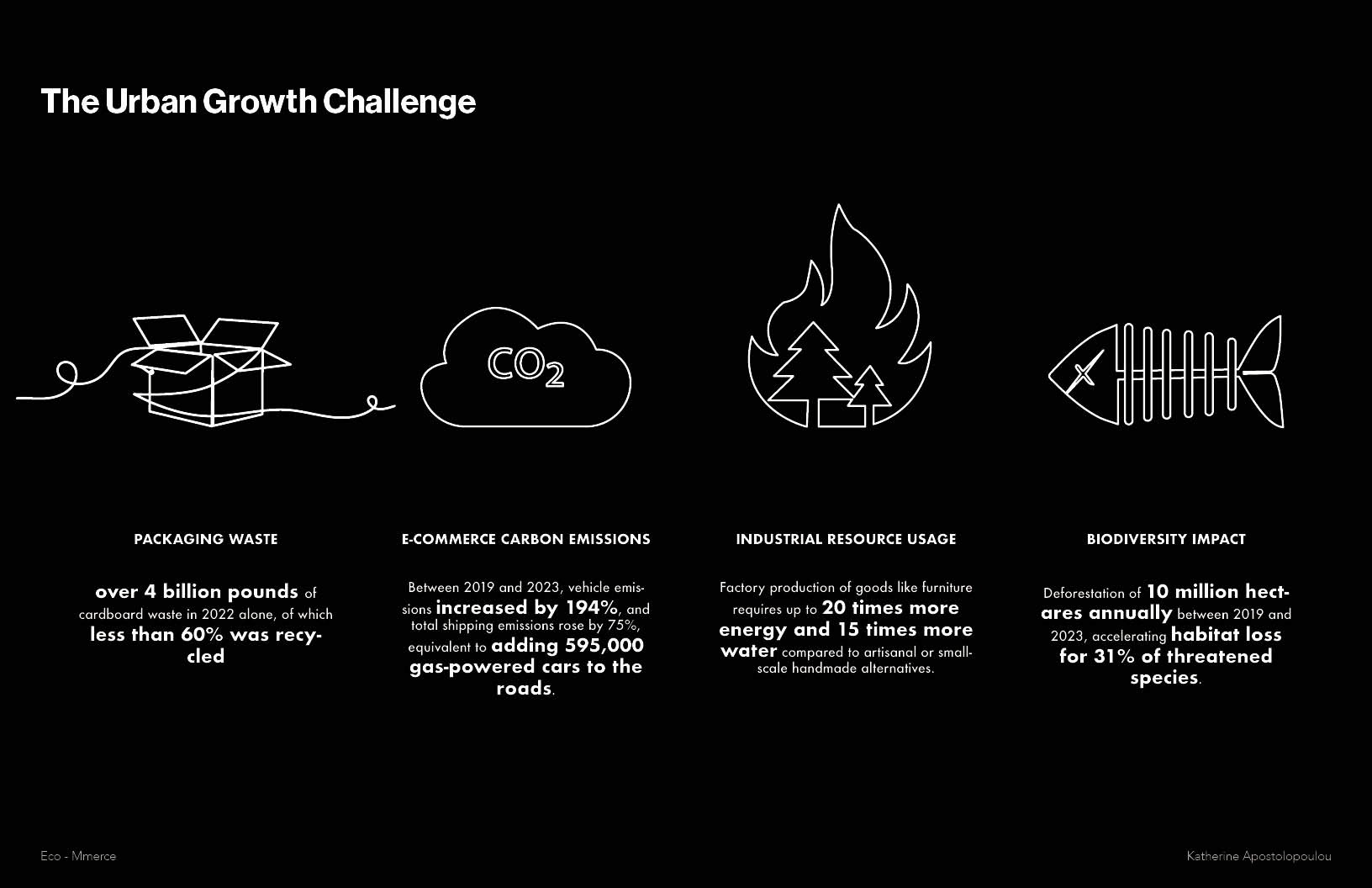
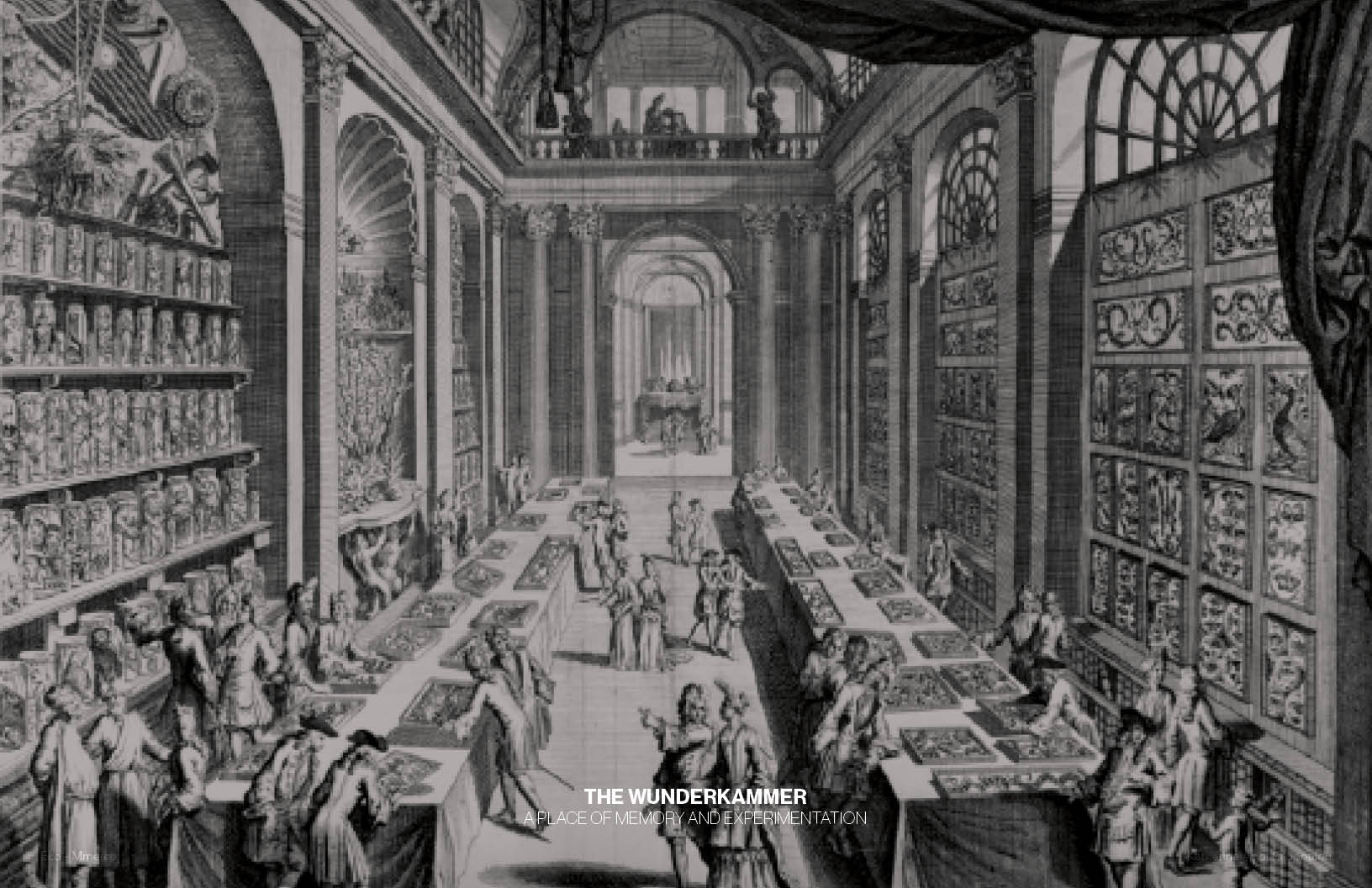
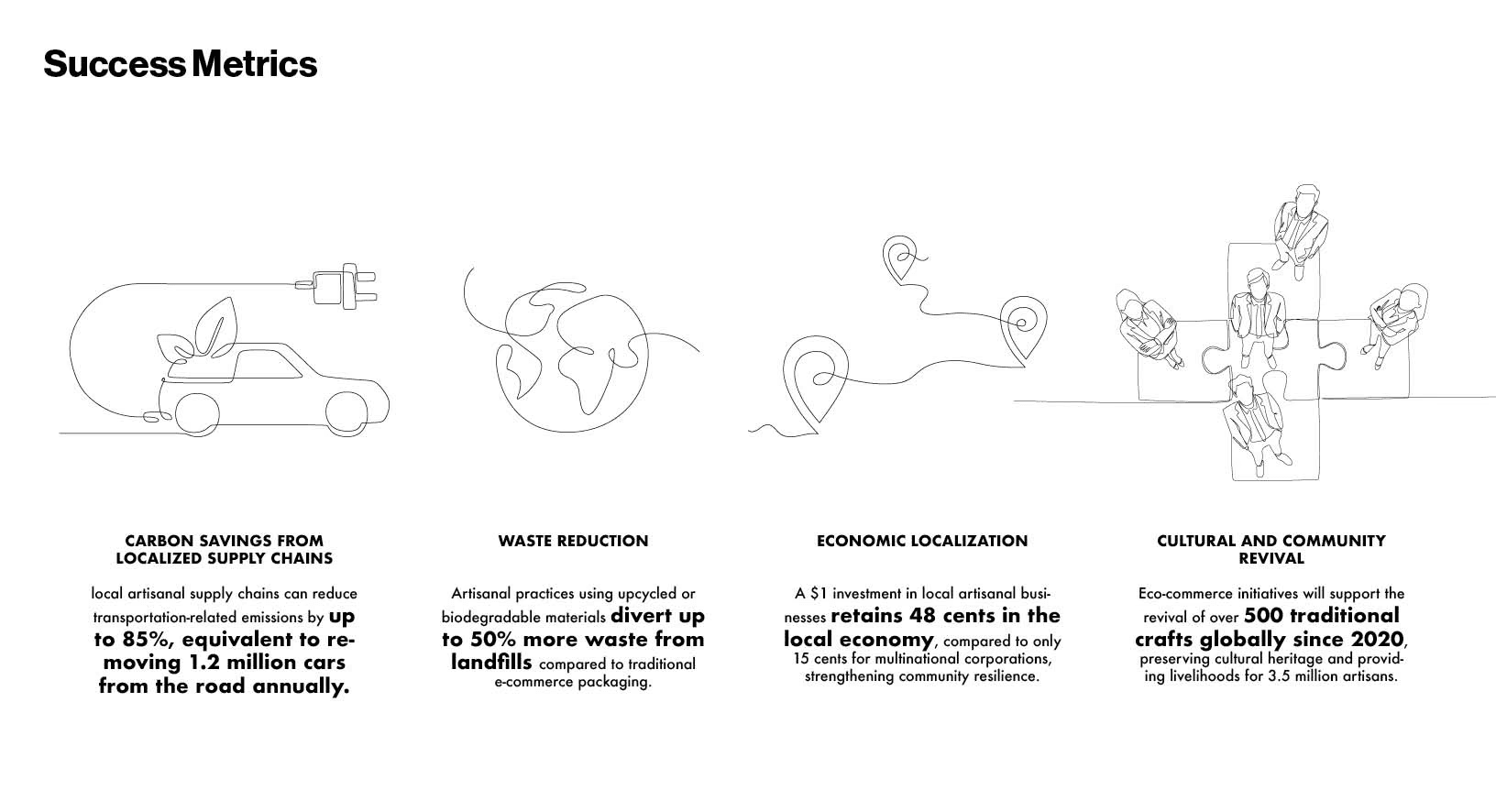
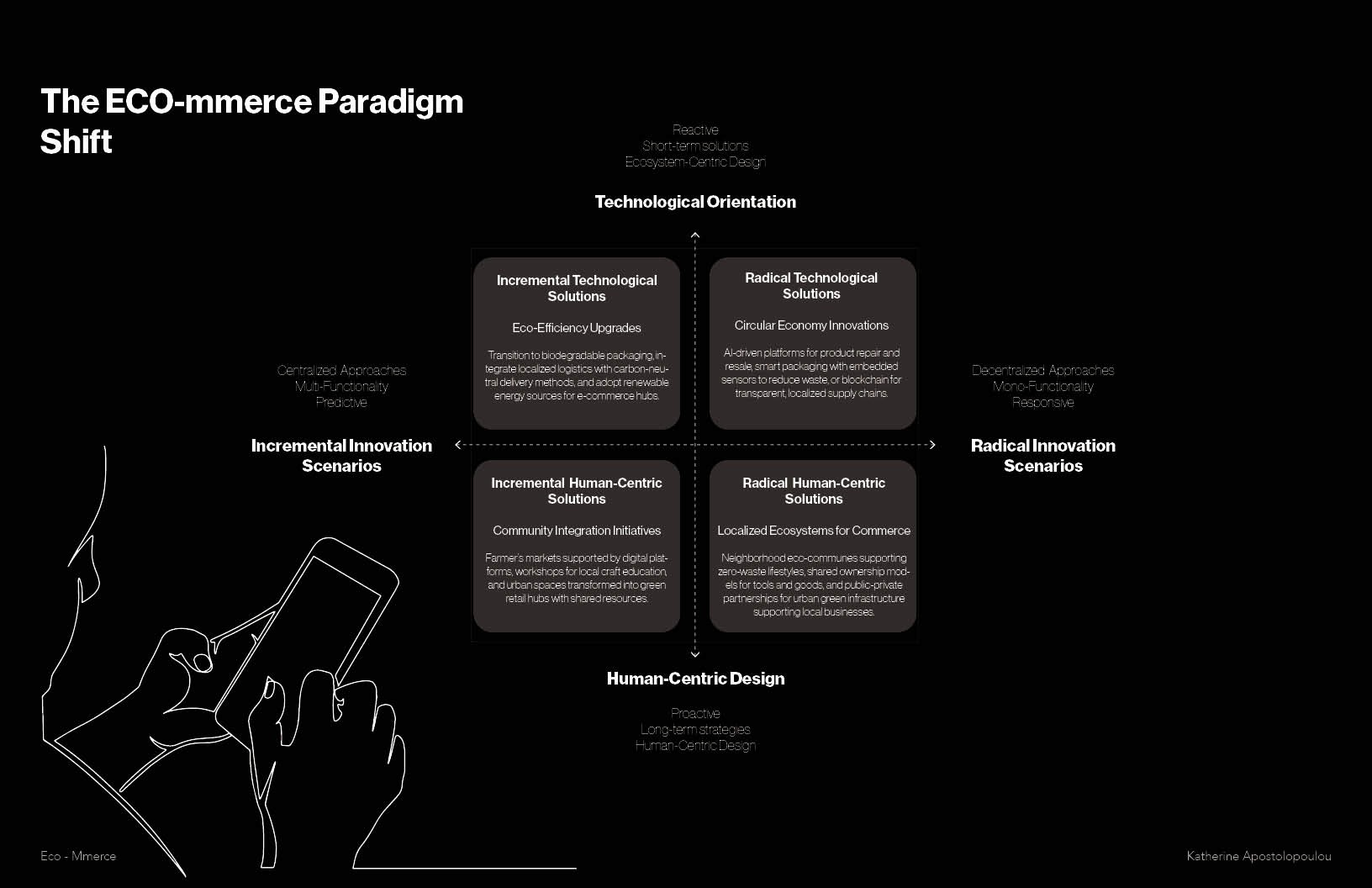
One of the project’s central challenges was confronting the environmental and social consequences produced by contemporary e-commerce and globalized retail systems while imagining alternative spatial models capable of supporting more localized and collective forms of exchange. The research investigates the impact of packaging waste, transportation emissions, industrial resource extraction, and biodiversity loss generated by current consumption patterns. These conditions are used as the basis for developing new architectural and urban scenarios centered on circular economies, localized supply chains, repair cultures, and shared civic spaces. The project draws inspiration from historical spaces of collective knowledge and exchange, including the Wunderkammer, reinterpreting them as contemporary environments where production, learning, experimentation, fabrication, and commerce coexist within a shared spatial framework. Architecturally, the proposal reimagines the shopping mall as an open civic structure organized around communal interiors, productive landscapes, workshops, urban agriculture, marketplaces, and collaborative spaces. Instead of functioning as closed commercial containers, these environments support social interaction, material reuse, and public participation while reducing dependency on large-scale extractive supply systems. Through speculative metrics and scenario-building, the project evaluates how localized systems could contribute to carbon reduction, waste minimization, economic resilience, and the preservation of cultural production.
Final thoughts
Commerce Beyond Consumption
Eco-mmerce proposes a shift from extractive models of retail toward spatial systems rooted in repair, participation, and ecological responsibility. Rather than imagining sustainability as a purely technological upgrade, the project frames environmental transition as a cultural and spatial transformation capable of reshaping how goods are produced, distributed, shared, and experienced within the city. The proposal ultimately positions architecture as an active participant within broader economic and ecological systems, suggesting new forms of collective infrastructure where commerce supports community life, local production, and environmental stewardship simultaneously.
(03)
PROJECTS