Year
2026
Theme
Joint Seminar on Railway and City Development, Central Railway Station Of Agios Dionysios
Category
Urban Planning and Infrastructural development
Location
Patras, Greece
Introduction
Reconnecting Rail Infrastructure and Coastal Urban Life
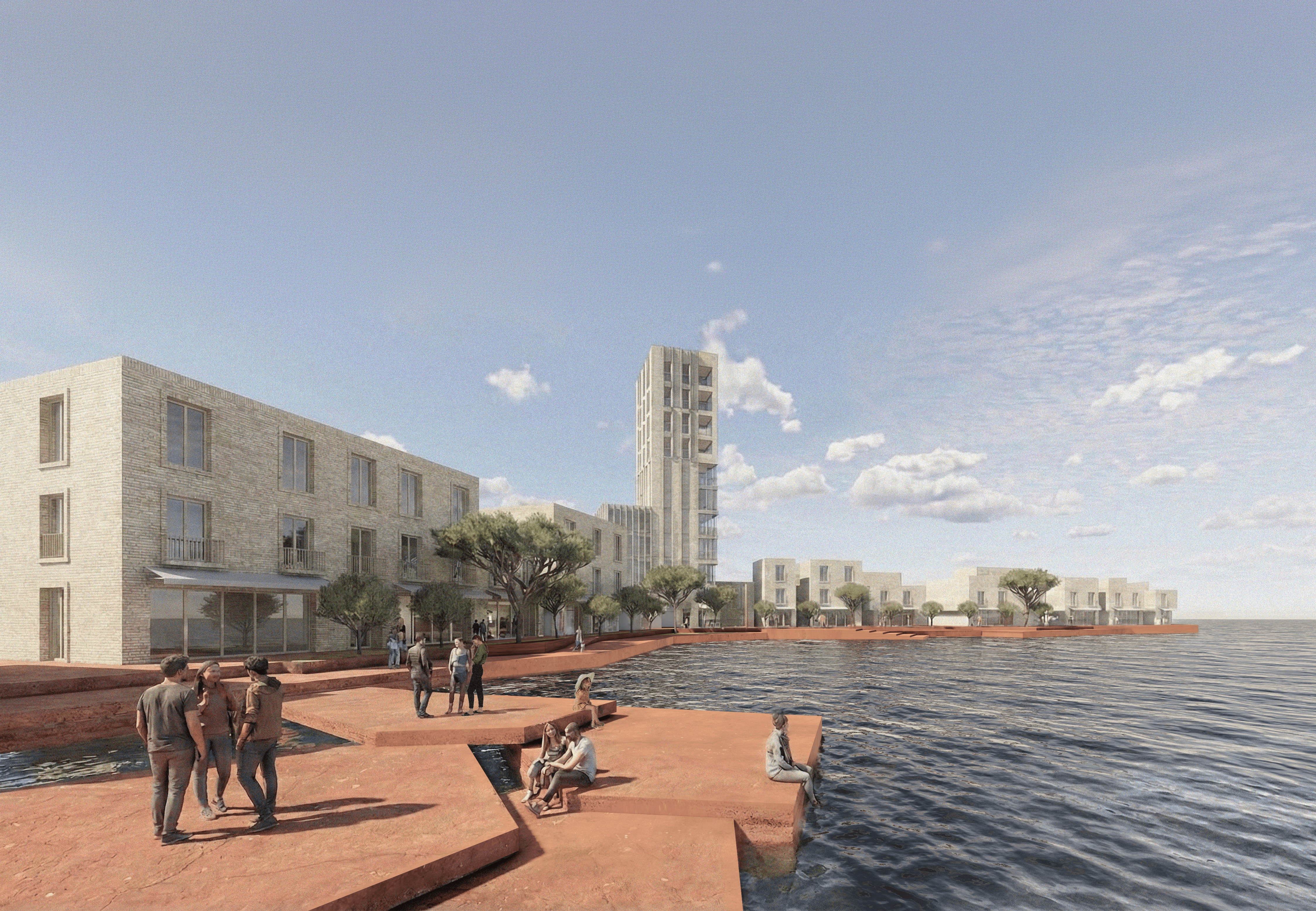
Rail-lease investigates the relationship between railway infrastructure, public space, and waterfront development in the city of Patras, Greece. Historically, the railway corridor has operated as a physical and spatial barrier separating the urban fabric from the coastline, limiting accessibility, continuity, and public engagement with the waterfront. As part of the Swiss-Greek Mobile Seminar, Code Patras, this proposal brings together expertise from the Universities of Athens, Patras, and ETH Zurich. The project reimagines the railway not as an element of division, but as a unifying urban infrastructure capable of reconnecting the city to the sea while supporting new forms of mobility, public life, and ecological integration. Developed through a phased urban strategy, the proposal combines transportation upgrades, landscape interventions, mixed-use development, and civic programs into a continuous coastal framework. By transforming infrastructural space into an accessible and active public environment, Rail-lease proposes a new relationship between mobility systems, urban identity, and collective waterfront life.
Challanges
Transforming Infrastructure from Barrier to Urban Connector
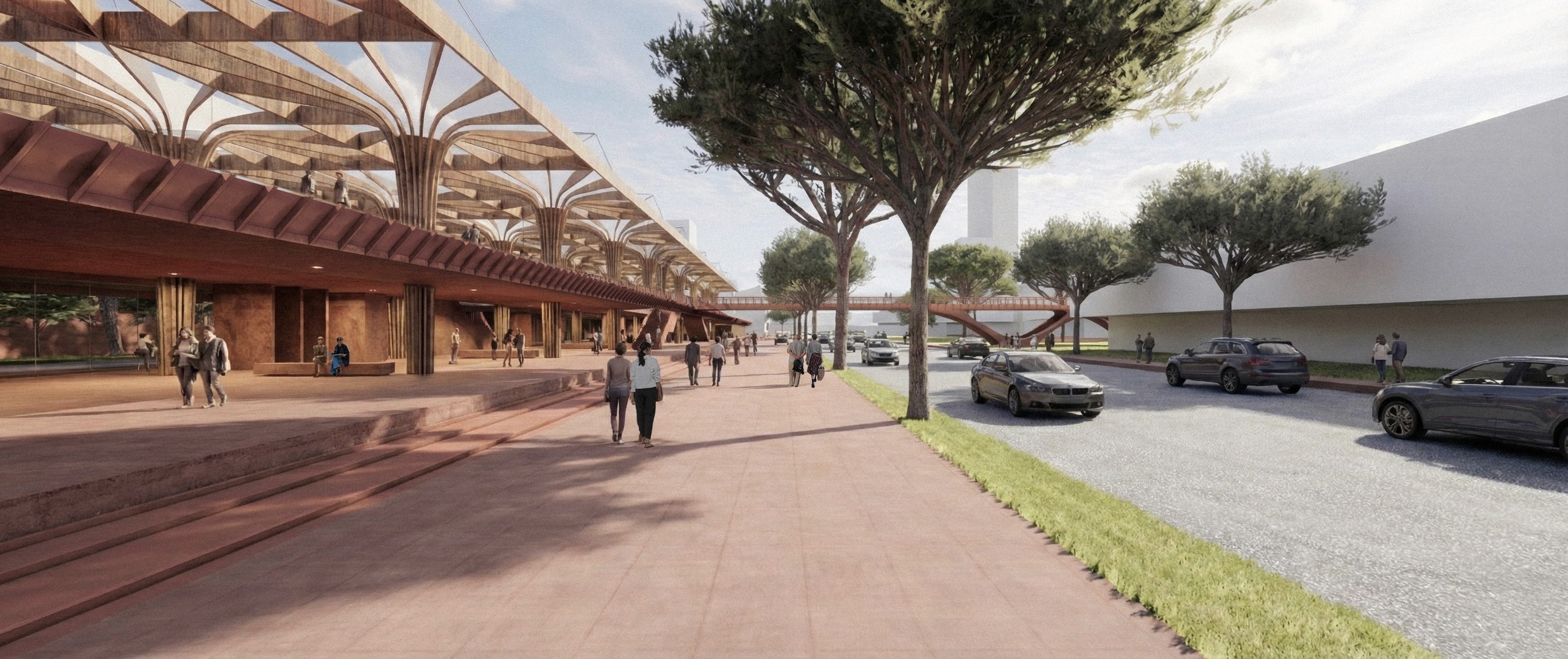
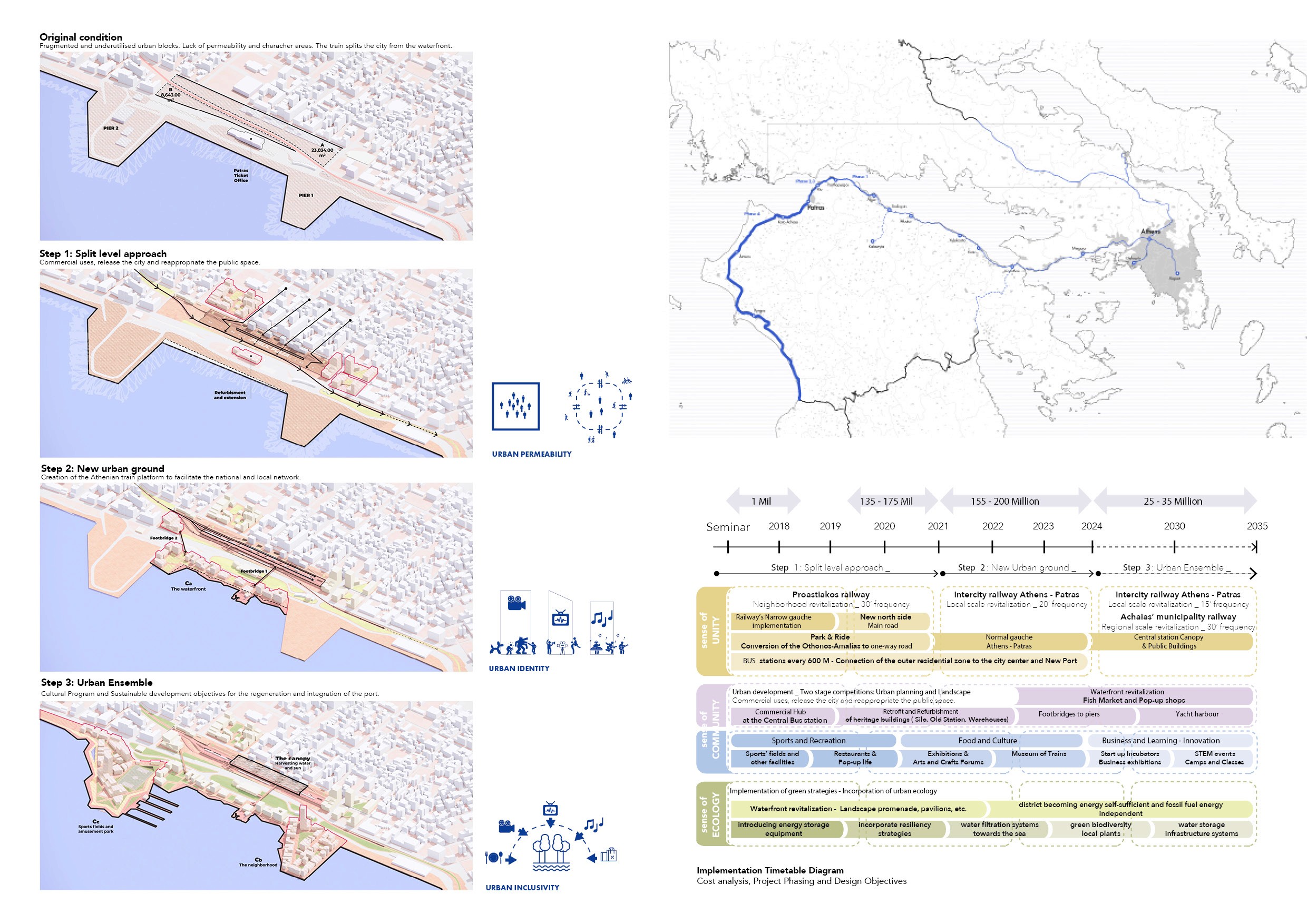
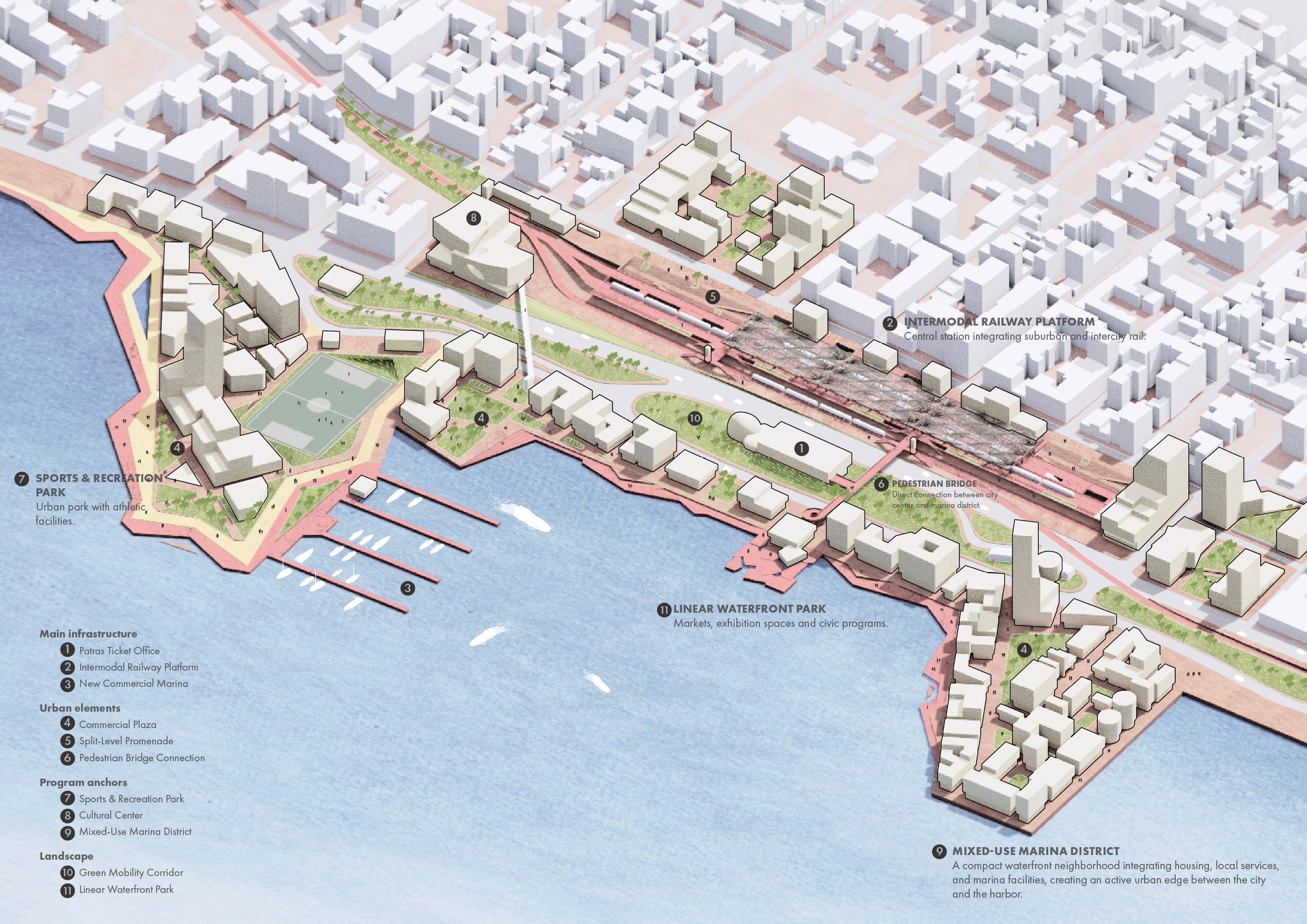
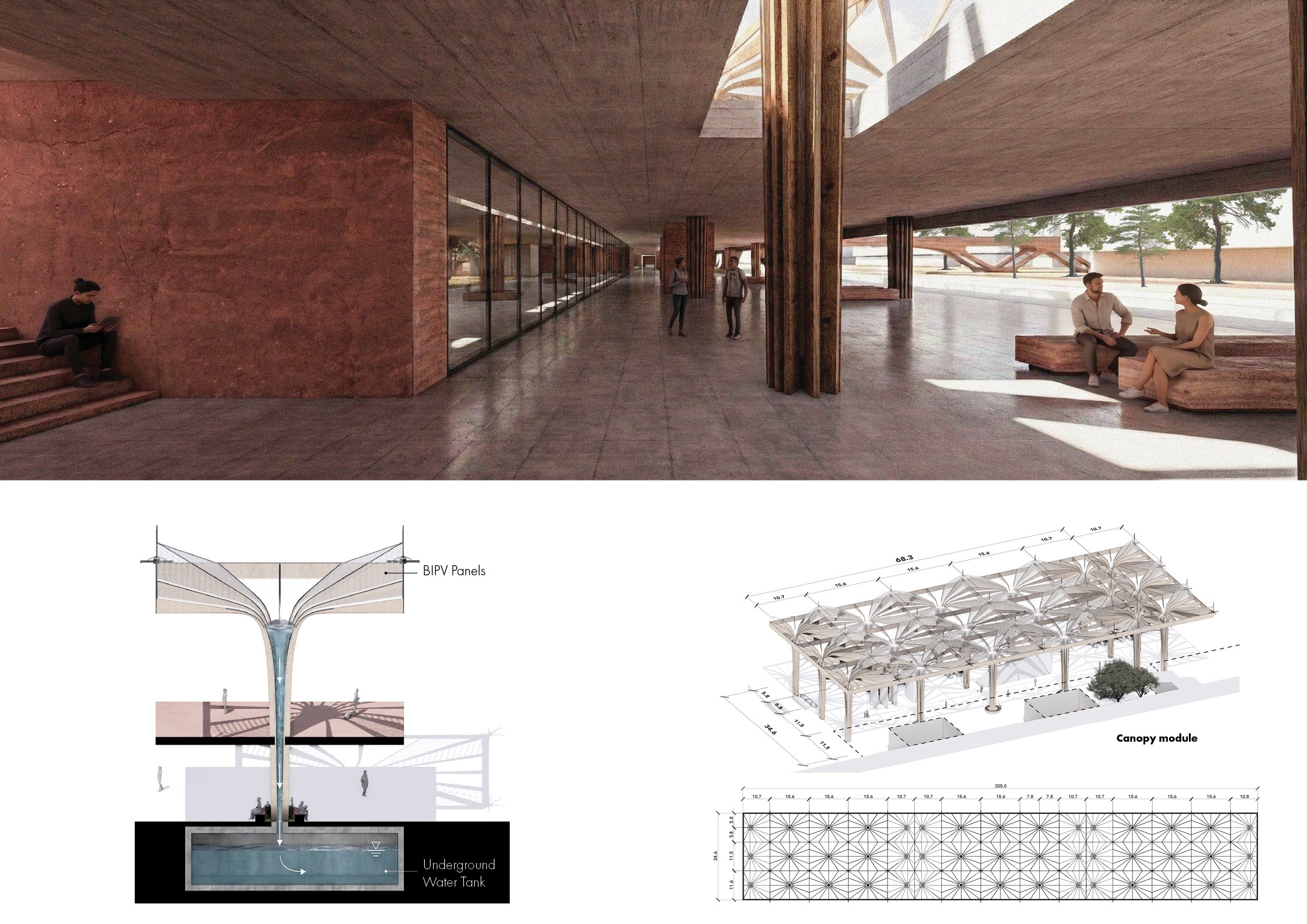
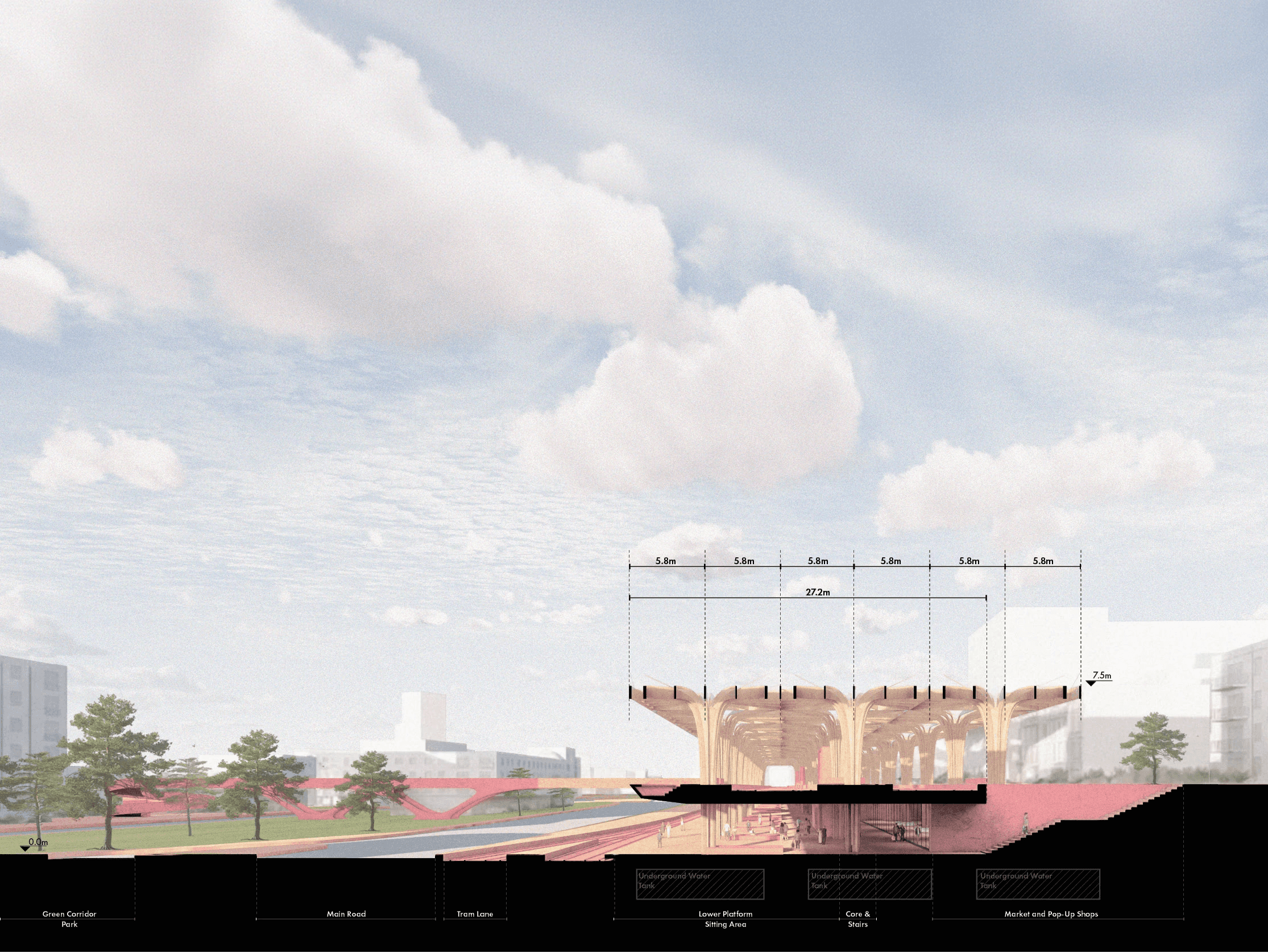
One of the project’s central challenges was addressing the long-standing spatial fragmentation created by the railway corridor across the Patras waterfront. Existing rail infrastructure disconnects neighborhoods from the coast, interrupts pedestrian continuity, and limits the integration of transportation systems within the broader urban fabric. The proposal responds through a phased redevelopment strategy that reorganizes the railway corridor into a multi-layered urban system combining transit, landscape, public space, and mixed-use development. Rather than removing the railway, the project integrates it within a broader civic and environmental framework capable of supporting both regional mobility and local urban life. Phase 1: Establish the Agios Dionysios central station and ensure the suburban train’s continuous operation. Key actions include adding new suburban train stations to improve service coverage, and repurposing the expansive plot at Agios Dionysios to house commercial spaces. Phase 2: Reactivate the Athens-Patras railway lines and complete the terminal at Agios Dionysios. Phase 3: Finalize the station with the addition of a light canopy. Public squares and commercial spaces at street level serve as transition areas, connecting the city center to the coastal front and laying the groundwork for broader urban renewal. The intervention introduces new public waterfront spaces, pedestrian bridges, transport hubs, cultural programs, commercial activities, and landscape infrastructures that reconnect the city across multiple scales. A modular canopy structure unifies the station environment while improving environmental performance through shading, water collection, and passive climatic strategies.
Final thoughts
Toward Integrated Infrastructural Urbanism
Rail-lease proposes an alternative approach to infrastructural development where railway systems operate as catalysts for urban cohesion, accessibility, and public life. By transforming the rail corridor into a layered civic and mobility framework, the project explores how transportation infrastructures can support broader processes of urban regeneration, economic activity, and environmental integration. The proposal reframes mobility not only as movement through the city, but as a spatial condition capable of shaping identity, continuity, and collective urban experience. Rather than separating infrastructure from urban life, Rail-lease positions the railway as an active component of the contemporary city and as a foundation for more connected and sustainable waterfront futures.

(03)
PROJECTS